
Module 01 — Forecast
Forecast
Demand-aware growth. Mycelia predicts where load will surge and pre-grows capacity into those lanes before the orders land.
−18% empty milesmodelled, 12-DC grocery network
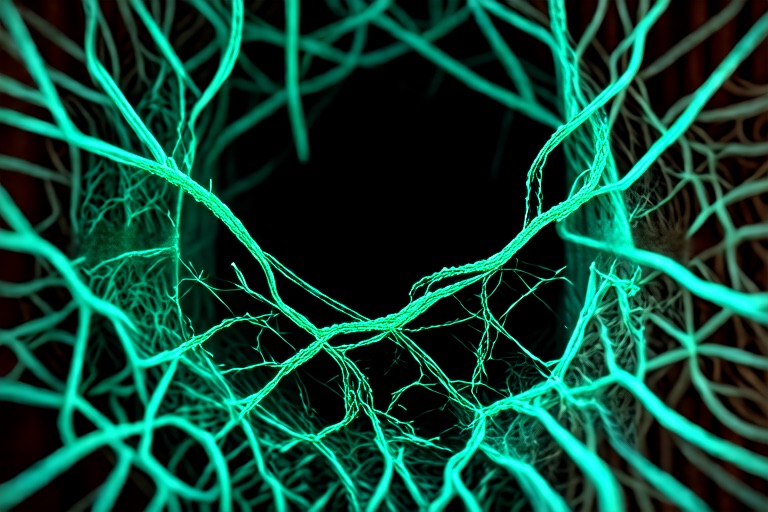
Mycelia is a routing solver that grows your supply chain the way a slime mold grows through a maze — pruning dead ends, reinforcing the lanes that carry load. Watch it resolve an optimal route in real time.
Drop in your distribution centres, lanes, and demand. Mycelia floods the graph with exploratory agents, then lets the strong paths starve the weak ones — the same reinforcement physics Physarum polycephalum uses to map the shortest route between food sources. What emerges is a network, not a guess.
Every facility, lane and demand signal becomes a node in the graph.
Millions of agents explore every possible connection in parallel.
Lanes carrying real load thicken; dead ends decay and vanish.
The surviving veins are your optimized route. Re-solved as conditions shift.
A slime mold with no brain can rebuild the Tokyo rail map overnight. Your supply chain deserves the same algorithm.
Most routing software optimizes a snapshot and calls it done. Real networks breathe — demand moves, lanes close, fuel spikes. Mycelia treats your supply chain as a living organism: continuously re-growing the path of least resistance, so the network you run tomorrow is never the one you froze last quarter.
Demand-aware growth. Mycelia predicts where load will surge and pre-grows capacity into those lanes before the orders land.
Live re-solving. A closed road, a port delay, a weather event — the network re-grows around the disruption in seconds, not planning cycles.

Vein-merging. Mycelia finds shipments that should share a lane and fuses them — fewer trucks, fuller loads, lower cost per drop.
Illustrative, modelled outcomes on synthetic networks. Filter by industry.
grocery parcel cold-chain 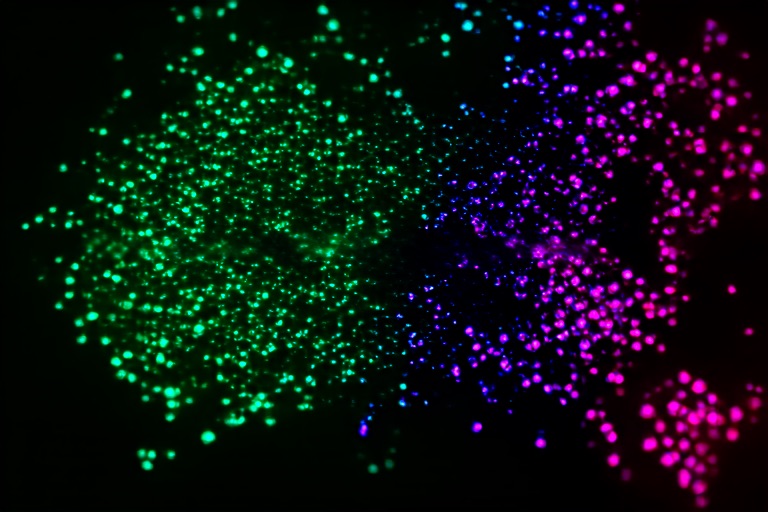 grocery parcel cold-chain grocery parcel
 All figures modelled on synthetic networks — illustrative, not client-reported.
It stopped optimizing a snapshot and started growing a network. The lanes nobody would have drawn by hand are the ones carrying the load now.
We watched a port closure ripple through and the route just re-grew around it before our planners had opened the dashboard.
Cold-chain is unforgiving — one broken lane spoils a load. Mycelia keeps the temperature-locked veins thick and the rest lean.
The biophysics framing sounded like a metaphor until the solver beat our incumbent on every synthetic graph we threw at it.
Re-solving in seconds changes what 'planning' even means. We plan continuously now.
Send your network — DCs, lanes, demand — and we'll grow it against your incumbent on a synthetic twin. You see the modelled delta before anything touches production.
Mycelia was founded by Dr. Lena Varga, a biophysics PhD who spent six years modelling Physarum reinforcement networks, and Marcus Oyelaran, a former Head of Network Operations who ran 400-lane distribution at continental scale. The thesis: the cheapest router in nature has no brain — only feedback.